


Has Hungary's Eastern Opening Policy Reached The Results It Sought?

Since taking office back in 2010, Hungarian Prime Minister Viktor Orbán has steadily diversified Hungary’s foreign relations, reorienting the country economically toward third countries such as China, Russia, and Türkiye while simultaneously granting them market access.
Nonetheless, Hungary continues to be plagued by an economic crisis, leading to slow growth as well as soaring inflation. Meanwhile, the surge of the opposition Tisza party casts doubts on Orbán's future at the helm of Hungarian politics in the lead-up to next year's parliamentary elections. Orbán’s woes at the polls have led him to seek the help of US President Trump in an attempt to boost his numbers, both by reaching a deal on sanctions exemptions for Russian gas and oil and by agreeing to host a summit between the US and Russia regarding the Ukraine war on Hungarian soil.
Given these recent developments, this article will analyse whether his Eastern Opening policy has failed and how he might leverage his political ties to autocratic leaders in order to influence the upcoming elections.
While Hungary experienced continuous GDP growth of around 4-5% from the late 1990s until the mid-2000s (World Bank, 2025), most of this was fuelled by large amounts of foreign debt and excessive government spending (Richter, 2012). Austerity measures implemented by the MSZP starting in 2006 to reduce the country’s high fiscal deficit and overheating economy resulted in economic stagnation.
Despite the reforms showing signs of promise in 2008, Hungary was hit hard by the global financial crisis, and the forint’s volatility made Hungarian government bonds very hard to sell. Ultimately, the country had no other option than to accept a €20 billion rescue package granted by the IMF, the EU, and the World Bank (Richter, 2012). In the midst of this economic turmoil, Viktor Orbán and his Fidesz party gained significantly in the polls by promising a reversal of the austerity reforms, lower taxes and the creation of one million jobs within ten years (Richter, 2012), by increasing foreign investment.
The 2010 Hungarian parliamentary elections saw Fidesz secure a landslide victory with nearly 53% of all votes, landing it a supermajority. Besides the spiralling economy, Orbán, who had previously served as Prime Minister from 1998 to 2002, also benefitted from the famous “Oszöd” speech – leaked comments by previous Prime Minister Ferenc Gyurcsány confirming his Hungarian Socialist Party (MSZP) had lied to its voters about the country’s financial situation in the run-up to the 2006 elections.
Hungary Goes East
Orbán had hinted at emphasising the Eastern vector in the country’s foreign economic policy during the 2010 election campaign, citing the ongoing financial crisis and what he perceived as a “Western decline.” During a 2009 visit to Beijing, he stated:
“Hungary’s place on the world map is clear, we are members of NATO and the European Union. This means that we are flying a Western flag, but today there is an East wind blowing in the world economy. Our sails must be turned accordingly” (Panyi, 2021).
The new foreign policy approach was rooted mainly in the procurement of foreign investment in the form of various projects. Starting in 2014, Hungary employed the help of Russian state company Rosatom in the expansion of its Soviet-era Paks nuclear power plant, a project known as “Paks II.” The project, which foresees the construction of two new nuclear reactors, has provoked criticism from other EU countries due to the site allegedly being unsuited for construction and the major debt Hungary took on in the process (Greilinger, 2023). Besides the Paks II project, Hungary – in contrast to nearly all other EU members and despite the ongoing war in Ukraine – also continued to rely heavily on Russian energy supplies: natural gas and oil made up 63% of the country’s energy supply in 2024, with the lion’s share being imported from Russia (IEA, 2025). Russia remains a major supplier of the country’s nuclear fuel, even after a recent agreement between Hungary and French nuclear reactor business Framatome on long-term uranium supplies (World Nuclear Association, 2024).
China is possibly the most important player within the Eastern Opening policy, with Hungary being keen on attracting infrastructure investments under the Belt and Road Initiative (BRI) and the China-CEEC framework. Several infrastructure projects, including the Belgrade-Budapest railway and the construction of a Contemporary Amperex Technology (CATL) battery factory near the city of Debrecen, have subsequently been concluded between the two countries (Greilinger, 2023). Additionally, joint projects such as the opening of a Fudan University campus – an institution known for its ties to the Chinese Communist Party – show that the Eastern Opening policy is not limited to the economic sphere alone. China has been the largest source of FDI for Hungary over the past two years, while Hungary accounted for approximately 31% of all Chinese FDI to the EU and UK in 2024 (BNE Intellinews, 2025).
The third main vector in the Eastern Opening policy is Türkiye and other Turkic states in the South Caucasus and Central Asia (Greilinger, 2023). By joining the Organization of Turkic States (OTS) – an intergovernmental alliance between Türkiye, Azerbaijan, Kazakhstan, Kyrgyzstan and Uzbekistan – as an observer state (Danube Institute, 2025), Hungary positioned itself at the western end of the so-called “Middle Corridor,” a trade route connecting Europe with China that has gained significance following Russia’s invasion of Ukraine. Closer cooperation with energy-rich countries like Azerbaijan and Kazakhstan reflects the country’s ambitions to diversify its energy reliance away from Russia.
Benefits for Whom?
In judging whether the strategy has paid off for Hungary, a clear differentiation between economic and political gains has to be made.
Taking a glance at the development of Hungary’s export shares, little has changed since the policy’s inception in 2010, with the main actors’ export shares even taking a slight dip. While China accounted for roughly 1.6% of Hungarian exports in 2010, this number has gone down to 1.22% in 2023 (WITS, 2024). Similarly, exports to Türkiye constituted 1.68% of all Hungarian exports in 2010 and only 1.63% in 2023 (WITS, 2024). By comparison, exports to Russia constitute the biggest drop, falling from 3.55% in 2010 to a mere 0.74% in 2023, likely due to increased EU sanctions following the war in Ukraine. Nonetheless, the falloff demonstrates how vulnerable Hungary’s policy is to geopolitical fluctuations.
Hungary’s general trade balances with the aforementioned countries have undergone similar developments. The country’s trade balance with China went from ~ €-4.64 billion in 2010 to ~ -7.86 billion in 2023, whereas the trade deficit with Russia rose from ~ €-3.46 billion to ~ €-5,03 billion. Its trade balance with Türkiye, while still being positive, has also diminished: from ~ €1.17 billion to ~ €947 million (WITS, 2024).
Meanwhile, Hungary’s trade dependency on other EU countries has actually risen from 73% to roughly 77% in 2024, one of the highest percentage figures of intra-EU trade in the whole bloc (Eurostat, 2025). At the same time, Hungary’s policy of cosying up to authoritarian states outside the EU has led to sharp criticism, with some EU lawmakers accusing the country of acting as a “Trojan horse” within the Union (De la Feld, 2024). Especially Germany, which accounts for almost a quarter of all Hungarian exports and whose economic malaise has contributed to Hungary’s sluggish growth, has recently hardened its rhetoric vis-à-vis Orbán.
However, while the Eastern Opening policy has not led to greater economic returns or a larger share of trade with its main partners, Orbán’s warm rhetoric and openness to investment from authoritarian countries – whose relations with the EU are, to varying degrees, tense – have provided him with leverage over Brussels and helped him fortify his regime and crony clientelism (Greilinger, 2023).
Given the EU’s crackdown on Orbán’s style of governing in recent years – mainly through withholding EU funds over concerns of corruption and rule-of-law backsliding (Bortoletto, 2024) – the increased investments by third partners, who tend to overlook Orbán’s authoritarian tendencies, have aided in offsetting the financial blow of these missing funds. The lack of transparency also facilitates the enrichment of those close to the Hungarian Prime Minister, while the latter’s frequent blocking of European Council decisions impacting the investing countries weakens the EU’s stance and unity.
Courting authoritarian leaders has allowed Orbán to take advantage of sanction exemptions in order to continue his foreign policy course, as shown by US President Donald Trump’s recent decision to exclude Hungary from US sanctions against Russian oil and gas companies (Hagan & O’Donoghue, 2025).
Orbán’s last straw
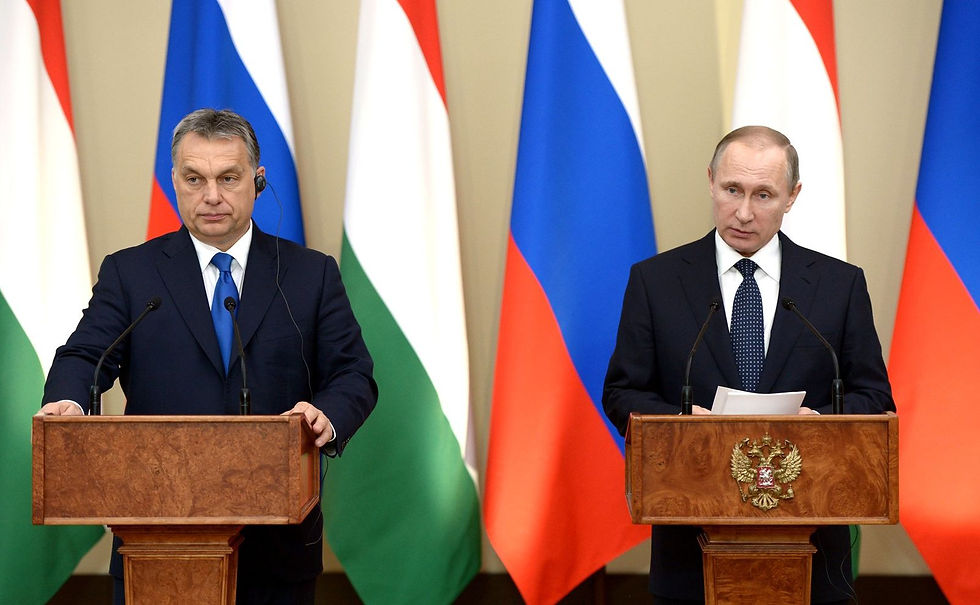
With his reelection in next year’s parliamentary elections looking anything but certain, Orbán will all but certainly look to leverage his friendly relations with extra-European world leaders in order to secure his fifth term as the country’s prime minister. The cancelled summit between Trump and Russian president Vladimir Putin (Reuters, 2025), which was supposed to take place in Budapest in late October, was seen as a means to highlight his image as a player on the international stage, capable of bringing geopolitical opponents to the same table and working towards peace. In 2022, amid the war in Ukraine, his perception as the “candidate of peace” helped him beat a unified opposition. However, with economic stagnation and high inflation continuing to weigh heavily on Hungarian voters’ minds, it is unclear whether Orbán can use his image to sway over disgruntled voters this time around.
Conclusion
Overall, the Eastern Opening has delivered limited economic returns for Hungary while proving far more valuable as a political tool for Viktor Orbán, allowing him to offset EU pressure, consolidate domestic clientelism, and project an image of geopolitical relevance. However, despite Orbán’s efforts to showcase himself as a statesman bridging East and West, Hungary’s deepening economic woes and the rise of a credible opposition threaten to undermine the political capital he has built through his ties to authoritarian partners. As next year’s elections approach, the Eastern Opening’s lack of economic benefits is becoming increasingly difficult to disguise, raising real doubts about whether Orbán can once again convert foreign policy symbolism into domestic electoral strength.
References
bne IntelliNews. (2025, May 30). Hungary top European destination for Chinese FDI for second year in a row. https://www.intellinews.com/hungary-top-european-destination-for-chinese-fdi-for-second-year-in-a-row-383710/#:~:text=The%20rebound%20was%20fuelled%20by,170%2C000%20jobs%20across%20the%20country
Bortoletto, F. (2024, December 16) Hungary will not get back European funds frozen for rule of law violations. Eunews. https://www.eunews.it/en/2024/12/16/hungary-will-not-get-back-european-funds-frozen-for-rule-of-law-violations/.
Danube Institute (2025, April 30) Organization of Turkic States and Hungary in new emerging world order. https://danubeinstitute.hu/hu/esemenyek/organization-of-turkic-states-and-hungary-in-new-emerging-world-order#:~:text=Hungary%2C%20an%20observer%20state%20since,regional%20cooperation%20and%20global%20dialogue.&text=Participation%20is%20free;%20however%2C%20due,right%20to%20modify%20the%20program.
De la Feld, S. (2024, September 3). From Meloni’s party unvarnished attack on ally Orbán: Hungary is the “Russian Trojan horse at the gates of the EU”. Eunews. https://www.eunews.it/en/2024/09/03/from-melonis-party-unvarnished-attack-on-ally-orban-hungary-is-the-russian-trojan-horse-at-the-gates-of-the-eu/.
Eurostat. (2025). Intra‑EU trade in goods - main features. European Commission. https://ec.europa.eu/eurostat/statistics-explained/index.php?title=Intra-EU_trade_in_goods_-_main_features
Greilinger, G. (2023). Hungary’s Eastern Opening Policy as a Long-Term Political-Economic Strategy. Austria Institut für Europa- und Sicherheitspolitik. https://www.aies.at/download/2023/AIES-Fokus-2023-04.pdf
Hagan, R., & O’Donoghue, G. (2025, November 8). Trump gives Hungary one-year exemption from Russian energy sanctions. BBC. https://www.bbc.com/news/articles/cp85dvnkpv4o
Hungarian Investment Promotion Agency. (2025, May 28). Hungary again top European destination for Chinese FDI. https://www.hipa.hu/news/hungary-top-european-destination-for-Chinese-FDI-MERICS_Rhodium_Group/
Panyi, S. (2021, March 15). Chinese spy games in Orbán’s Hungary. Direkt36. https://www.direkt36.hu/en/kemjatszmakat-hozott-budapestre-orban-kinai-nyitasa/
Reuters. (2025, October 31). Trump-Putin summit cancelled after Moscow sent memo to Washington, FT reports. https://www.reuters.com/world/europe/trump-putin-summit-cancelled-after-moscow-sent-memo-washington-ft-reports-2025-10-31/.
Richter, S. (2012, May 22). The Chokehold of Populism - Hungary’s Economy. Heinrich Böll Stiftung. https://www.boell.de/en/2012/05/22/chokehold-populism-hungarys-economy
World Bank. (n.d.) GDP growth (annual %) - Hungary. https://data.worldbank.org/indicator/NY.GDP.MKTP.KD.ZG?locations=HU
World Nuclear Association. (2024). Country profiles: Nuclear Power in Hungary. https://world-nuclear.org/information-library/country-profiles/countries-g-n/hungary
World Integrated Trade Solution (WITS). Hungary trade flow, exports and imports, 2023. https://wits.worldbank.org/CountryProfile/en/Country/HUN/Year/2023/tradeFlow/EXPIMP
World Integrated Trade Solution (WITS) (n.d.). Hungary exports by region, 2010. https://wits.worldbank.org/CountryProfile/en/Country/HUN/Year/2010/TradeFlow/Export/Partner/by-region


Comments